

Businesses have access to AI systems that can summarize documents, analyze data, write code, research topics, and coordinate tasks. Yet many organizations still use these tools primarily to answer questions or draft emails. The technology is advancing rapidly, but the way it is incorporated into everyday work changes much more slowly.
The gap between available AI capabilities and their practical use is often described as capability overhang. This disconnect reflects more than technological limitations. Employee familiarity, organizational processes, and the ability to integrate advanced AI tools into existing workflows all influence how effectively businesses adopt the technology. The business question is not simply what AI can do, but how effectively organizations put it to work.
AI Capabilities Are Improving Faster Than Business Workflows
AI performance is difficult to summarize with a single number because systems vary across reasoning, coding, retrieval, and tool use. One useful measure comes from METR, which studies the length of software-related tasks that AI agents can complete. Its March 2025 analysis estimated that the task-completion time horizon of leading systems had roughly doubled every seven months over the period studied.
A time horizon does not mean an AI agent can reliably operate for that many minutes without supervision. It refers to the estimated duration a human expert would need to complete tasks at a specified model success rate. METR also identifies limitations involving task selection and how well its results generalize to real work. Even so, the research illustrates why the scope of potential AI assistance is expanding.
Business processes do not automatically adjust when model capabilities improve. Existing applications, approval requirements, employee responsibilities, data access, and habits can remain unchanged. A model may become better at a task while the organization continues to handle that task through the same manual sequence.
Understanding the AI Capability Gap
The capability gap appears when access to powerful tools outpaces practical understanding and implementation. An employee may know that an AI assistant can write text but not realize it can analyze a spreadsheet, compare technical documents, or organize research steps. Another employee may know these features but lack access to the data needed to use them at work.
OpenAI’s January 2026 report, Ending the Capability Overhang, describes differences in how people use advanced AI features. Among subscribers on the same Plus plan, it reports that users at the 95th percentile consumed approximately seven times more thinking capability than median users. This is a usage comparison, not evidence that power users are seven times more productive.
The report also identifies differences in advanced usage across countries. These findings illustrate uneven adoption, but they do not establish that every organization can obtain the same results by increasing model usage. More intensive interaction may reflect different tasks, skills, incentives, and work environments.
For businesses, the distinction is between access and effective application. Providing subscriptions removes one barrier. It does not establish which processes deserve attention, what successful output looks like, or who is responsible when AI makes a mistake.
Why Businesses Struggle to Capture AI Value
Employees Stay With Familiar Uses
Question answering and drafting are straightforward places to begin. They fit existing routines and require little process change. Advanced work often involves choosing tools, preparing inputs, checking outputs, and connecting systems. That effort can make employees return to simpler applications even when better options exist.
AI can also be counterintuitive. Employees may not know an unfamiliar task is possible until someone demonstrates it using relevant data. Generic prompt training may increase familiarity without teaching people to recognize opportunities in their responsibilities.
Information and Systems Remain Disconnected
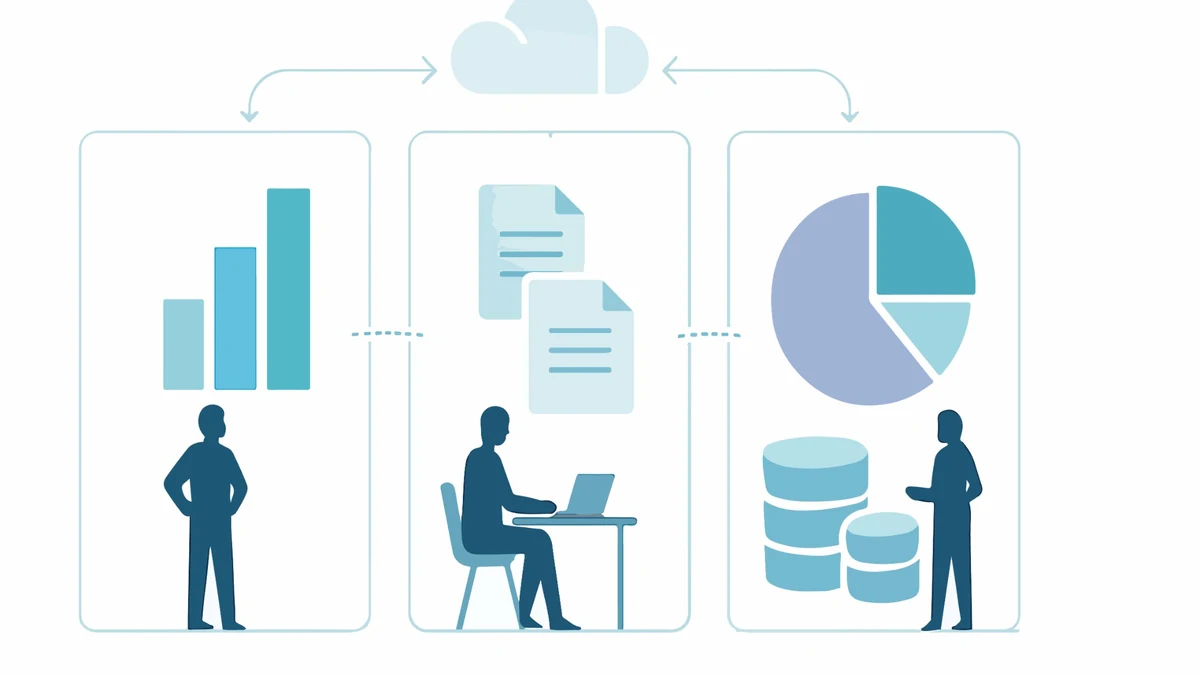
A useful business workflow may depend on information from customer records, project documentation, financial systems, and employee communications. If those sources are inconsistent or inaccessible, a capable model has little reliable context.
Consider a hypothetical service company preparing customer renewal proposals. Staff review earlier contracts, gather project updates, verify pricing, and summarize account history. AI could organize approved information into a draft, while integrations retrieve current records and flag missing details. An account manager would check conflicting records and verify commercial terms before sending it. The improvement comes from streamlining the full renewal process, not just drafting faster.
Organizations Automate Activities Instead of Outcomes
Generating more reports or customer messages is easy to measure. Demonstrating that those outputs improved a decision or completed a process is harder. A company might celebrate thousands of AI-assisted interactions while employees spend additional time correcting them.
Google’s 2025 DORA research on AI-assisted software development found that AI tends to amplify existing organizational strengths and weaknesses. The report focuses on software delivery rather than every industry, but its lesson is relevant: better tools are not substitutes for healthy processes, clear responsibilities, and coordinated teams.
From Individual Prompts to Repeatable Workflows
Move beyond isolated prompts by starting with a business result, such as an accurate customer briefing or faster reconciliation. Map the sequence of tasks, information sources, handoffs, and decisions needed to complete the work. Identify where AI can assist and where existing applications or employees must take over.
For customer support, an employee might search account history and policy documents, draft a reply, and record the interaction. AI could retrieve approved material and prepare a response, while the workflow defines escalation and record-update permissions.
A workflow is more than a series of AI-generated sentences. It requires reliable inputs, predictable handoffs, and confirmation that the correct work was completed. AI agents and integrations can support multistep tasks, but their permissions and exception handling should match the risks.
Not every organization needs sophisticated autonomous systems. For some teams, an approved knowledge source and a human reviewer offer more dependable value than a complex agent. The right level of automation depends on process requirements and consequences of errors.
Closing the Gap Through Training and Workflow Design
Teach Capabilities Through Real Tasks
Begin with a limited pilot of a recurring process and train employees using realistic materials. Show them how to evaluate AI output, recognize missing context, and return uncertain work to a person. Assign a pilot owner, gather feedback from participants, and use the results to improve the training before extending the approach to other teams.
An exercise might compare three approaches to preparing a project update: manual consolidation, AI-assisted drafting from approved notes, and an integrated process that collects information automatically. Employees can see where effort shifts and which safeguards remain necessary.
Build Around Trusted Data and Clear Ownership
Before connecting AI to business systems, determine which sources contain authoritative information and who may access them. Establish rules for data handling, approval, and error correction. A summary that contradicts the system of record should not silently become an official record.
Software integration can move approved information between applications, but the connection itself is not proof of reliability. Teams must validate inputs, control permissions, log consequential actions, and define recovery from mistakes. These foundations matter when expanding AI from content assistance into operations.
Make Effective Uses Reusable
Make successful workflows discoverable and reusable. Record their purpose, required inputs, limitations, review standards, and expected results. Share practical demonstrations, examples, and employee feedback so effective use spreads beyond the original pilot.
Ownership matters after launch. As models, business rules, and source systems change, processes require maintenance. Assign someone to evaluate performance, respond to exceptions, and decide when a workflow should be revised or retired.
Measure Business Impact, Not AI Activity
A practical pilot needs a baseline. Measure the current process before introducing AI, including completion time, rework, errors, and employee effort. Then compare the AI-assisted approach on similar work, accounting for time spent checking outputs and correcting mistakes.
Measures should reflect the objective. A sales team might track qualified opportunities rather than messages sent. A software team might track tested changes delivered rather than code generated. An operations team might compare resolved cases and exception rates rather than automated actions.
Results require context. A faster process that increases customer complaints or exposes sensitive data is not necessarily an improvement. Evaluate cost, reliability, adoption, and consequences of failure before expanding. Successful scaling depends on whether the process works outside a supervised trial.
Final Thoughts
Closing the AI Capability Gap requires more than access to advanced technology. Businesses need employees who understand how to apply AI, reliable information to support those applications, and workflows designed around meaningful outcomes.
As AI capabilities continue to advance, the advantage will not necessarily belong to organizations using the most sophisticated tools. It will belong to those that can consistently translate available capabilities into reliable improvements in how work gets done.